Integrating Silhouette Art Supplies and Decorative Containers into Your Creative Workflow
In the modern creative landscape, the distinction between the tools we use and the environment in which we work has blurred. Success in artistic endeavors, whether for a small business owner launching a new product line or an educator preparing classroom materials, relies heavily on two pillars: the quality of the Silhouette Art Supplies employed and the organization of the workspace itself. When you combine high-precision drawing and cutting tools with thoughtfully designed storage solutions, such as black silhouette art supplies housed in decorative containers, you create a ecosystem that supports efficiency, consistency, and inspiration.
This article explores how to integrate these elements into a practical workflow. We will examine the role of specific stationery and artist tools, the importance of desk organization using patterned holders, and how digital assets like silhouette vector bundles complement physical crafting processes. The goal is to move beyond simple acquisition and focus on implementation—how these items function before, during, and after a project to enhance output quality.
The Foundation: Selecting and Utilizing Core Artistic Tools
At the heart of any creative process lies the selection of appropriate drawing tools and painting tools. For professionals aged 20 to 50 who manage tight deadlines, the reliability of pens, pencils, markers, and brushes is non-negotiable. Silhouette art supplies often refer not just to the machines used for cutting vinyl or paper, but to the entire suite of manual tools required to prepare designs for digitization or final production.
Consider the phase of preparation. Before a design can be cut or printed, it must be sketched and refined. High-quality pencils allow for precise initial outlines, while fine-liner pens ensure that graphic elements remain crisp when scanned. In a workflow involving black silhouette art, contrast is key. Using ink tools that provide deep, saturated blacks ensures that when the design is converted into a vector format, the software can easily distinguish between the subject and the background. This reduces the time spent on cleanup and editing later in the process.
Furthermore, the choice of brushes and markers dictates the texture of the final piece. Whether you are creating ornate fleur-de-lis patterns or simple geometric shapes, the tool must match the intended aesthetic. A wavy line created with a flexible brush pen carries a different energy than one drawn with a rigid ruler and technical pen. Understanding these nuances allows creators to make intentional decisions early in the project lifecycle, preventing costly revisions downstream.
Workspace Organization: The Role of Decorative Containers
Efficiency is often lost not due to a lack of skill, but due to poor organization. This is where decorative containers, holders, cups, and vases play a critical functional role. While often viewed merely as aesthetic additions, these items are essential components of a streamlined desk organization strategy. When art supplies are scattered, the cognitive load increases, breaking the flow state necessary for deep work.
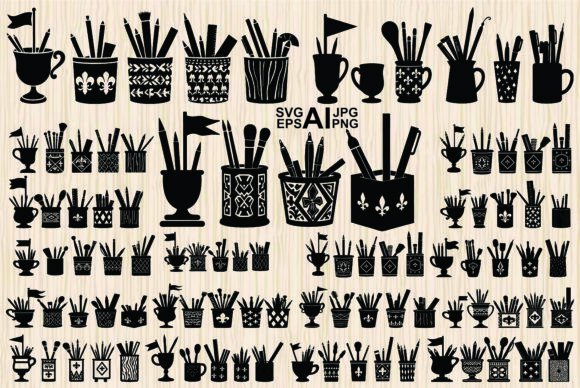
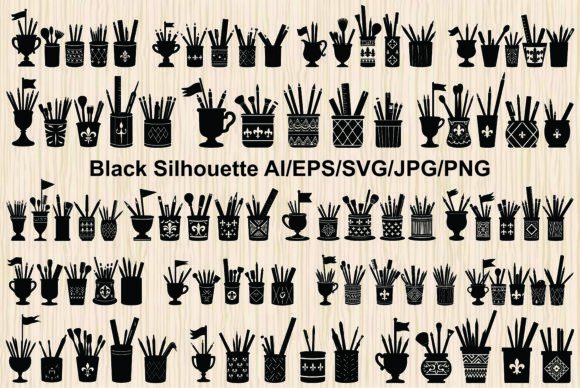
Implementing a system using black silhouette art supplies stored in themed containers can transform a chaotic studio into a productive hub. Imagine a workspace where rulers, crayons, and scissors are sorted into vessels featuring stripes, checkered patterns, or wavy lines. This visual categorization serves a dual purpose: it aids in quick retrieval of tools and reinforces the brand identity or personal style of the creator. For entrepreneurs and marketers, a visually cohesive workspace can also serve as a compelling background for content creation, adding value to social media posts or blog headers without extra effort.
The material and design of these containers matter. Ornate holders with fleur-de-lis motifs might suit a traditional illustration studio, while sleek, geometric cups align better with a modern graphic design firm. The key is compatibility. The storage solution must accommodate the volume of tools you possess while remaining accessible. A well-organized array of creative tools ensures that when inspiration strikes, the transition from idea to execution is seamless.
Bridging Physical and Digital: The Vector Bundle Advantage
In today's hybrid work environments, the line between physical crafting and digital design is increasingly porous. Many creators start with hand-drawn sketches using traditional stationery and writing tools, only to convert them into digital formats for scaling, printing, or web use. This is where a comprehensive silhouette vector bundle becomes an invaluable asset.
A robust bundle typically includes multiple file formats to ensure compatibility across various platforms and software. For instance, a standard collection might contain five types of formats packaged within a single zip file. Upon downloading, the user extracts the archive using tools like WinZip or WinRAR, or by simply double-clicking on modern operating systems. Inside, you will find:
- JPG files: Ideal for quick previews, web usage, and inserting into documents where transparency is not required.
- PNG files: Essential for designs requiring transparent backgrounds, allowing for easy layering in digital compositions.
- AI files: Native Adobe Illustrator formats that offer full editability for professional graphic designers.
- EPS files: A universal vector format compatible with a wide range of design software, ensuring long-term usability.
- SVG files: Perfect for web developers and those using cutting machines, providing scalable graphics that retain quality at any size.
The versatility of having all these formats in one assortment cannot be overstated. It allows a freelancer to take a single design concept and adapt it for a client's website (SVG), a printed brochure (EPS), and a social media campaign (PNG) without recreating the artwork from scratch. This interoperability significantly accelerates the creative process and ensures consistency across different media channels.
Practical Implementation and Workflow Integration
To effectively integrate these resources into your routine, consider a phased approach. Start by auditing your current school supplies, office supplies, and craft supplies. Identify gaps in your toolkit—are you missing specific pens for high-contrast outlining? Do you lack adequate containers to sort your growing collection?
Once your physical toolkit is optimized, establish a protocol for digitization. If you utilize hand-drawn elements, scan them at a high resolution and trace them using the vector files from your bundle as a reference or base. Because the bundle files are cleared for any purpose, you can incorporate them directly into commercial projects, educational materials, or personal branding efforts without legal hesitation. This flexibility empowers small business owners to iterate quickly on product designs or marketing collateral.
Maintenance and quality control are also vital. Regularly review your artist tools to ensure brushes are clean and pens are capped to prevent drying. Similarly, keep your digital library organized. Create folders on your hard drive that mirror the file types (JPG, PNG, AI, etc.) or project categories. This habit ensures that when a deadline approaches, you spend time creating rather than searching.
Long-Term Value and Consistency
The true measure of these supplies and assets is their longevity. High-quality rulers and markers withstand years of use, while a well-curated vector bundle serves as a perpetual resource for new ideas. By investing in a cohesive set of design elements—from the physical black and white aesthetic of your tools to the digital precision of your vectors—you build a foundation for sustainable creativity.
Whether you are an educator designing worksheets, a blogger crafting unique headers, or a publisher laying out a book, the synergy between organized physical tools and versatile digital assets drives success. The creative background you cultivate, both literally and metaphorically, sets the stage for innovation. By treating your supplies not just as objects but as integral parts of a larger workflow, you enhance your capacity to execute complex projects with clarity and confidence.
Ultimately, the integration of Silhouette Art Supplies and strategic organization transforms the act of making from a disjointed series of tasks into a fluid, enjoyable, and highly productive process. Embrace the combination of tactile tools and digital flexibility to unlock the full potential of your creative vision.