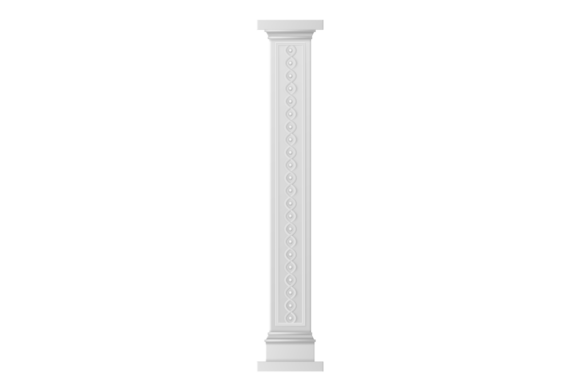
Antique White Column with Ornament: Classic Design for Modern Projects
There is a specific kind of visual authority that comes from classical architecture. It suggests stability, history, and a certain level of refinement that modern minimalism sometimes struggles to convey on its own. This is precisely why the antique white column with ornament has become such a versatile asset for designers, marketers, and content creators. Whether you are building a brand identity for a luxury law firm, designing a wedding invitation suite, or creating educational materials about art history, this element bridges the gap between ancient grandeur and contemporary clarity.
When we talk about an antique white column with ornament, we are referring to a digital or physical representation of architectural pillars rooted in Greek and Roman traditions. These are not just structural supports; they are decorative statements. The "antique white" finish implies aged marble, carrying the weight of centuries, while the "ornament" refers to the intricate details—acanthus leaves, scrolls, fluting, and capitals—that define styles like Corinthian, Ionic, or Doric. Having access to high-quality vector isolated illustrations (EPS) or high-resolution JPGs of these columns allows you to inject this classical aesthetic into your work without the logistical nightmare of sourcing actual stone props or hiring architectural photographers.
Why Classical Elements Resonate in Digital Spaces
You might wonder why a digital creator or a small business owner would need a graphic of a marble pillar. The answer lies in semiotics—the study of signs and symbols. In visual communication, columns are shorthand for permanence and trust. When a user sees a classical column, their brain instantly associates the surrounding content with institutions that have stood the test of time. This is invaluable for businesses trying to establish credibility quickly.
For entrepreneurs and marketers, this means you can borrow the authority of ancient civilizations to bolster your modern brand. A financial advisor using an antique white column with ornament in their brochure isn't just decorating a page; they are subtly signaling that their advice is solid, structured, and enduring. Similarly, a boutique hotel using these graphics in their web design can evoke the feeling of a palace stay, elevating the perceived value of their service before a guest even books a room.
Practical Use Cases Across Industries
The utility of these assets extends far beyond interior design mockups. Here is how different professionals can leverage classical column illustrations in realistic scenarios.
Branding and Corporate Identity
Law firms, consultancies, and heritage brands often struggle to look modern without appearing fleeting. By incorporating a stylized column into a logo or letterhead, these entities can maintain a traditional feel while keeping the layout clean. The vector format (EPS) is crucial here because it allows you to scale the ornamentation up or down without losing crispness. You can isolate the capital of the column to use as a border element or use the full shaft to frame text in a annual report. The key is subtlety; the column should support the content, not overwhelm it.
Event Design and Stationery
Wedding planners and graphic designers specializing in invitations frequently reach for classical motifs. An antique white column suggests elegance and formality. For a black-tie wedding or a gala dinner, using a faint watermark of a Corinthian column behind the text adds texture and depth to the paper stock. It creates a sense of occasion. Because these illustrations are often isolated on transparent or white backgrounds, they are easy to layer over soft pastels or deep navy blues, common colors in formal event palettes.
Educational and Editorial Content
Educators, historians, and publishers benefit immensely from accurate architectural illustrations. When teaching about the Parthenon or the Roman Forum, having a clear, isolated image of a column helps students understand structural components. Unlike a photograph taken at an awkward angle, a vector illustration can show the perfect symmetry and detail of the ornamentation. Bloggers writing about travel, history, or architecture can use these JPGs to break up text and provide visual context without worrying about copyright issues associated with stock photography of famous landmarks.
Digital Marketing and Social Media
In the fast-paced world of social media, standing out requires strong visuals. A carousel post about "Timeless Business Principles" could use a column graphic as a consistent visual anchor on each slide. This creates a cohesive look that signals quality. Moreover, the contrast of the white marble against vibrant background colors popular on platforms like Instagram can make your posts pop. It is a way to slow down the scroll by offering something that feels substantial and carefully crafted.
Choosing the Right Format: EPS vs. JPG
Before you download or purchase an antique white column with ornament, you need to consider how you will use it. The format matters significantly for your workflow.
- Vector (EPS): Choose this if you are a designer working in Adobe Illustrator, InDesign, or similar software. Vectors are resolution-independent, meaning you can print the column on a billboard or a business card, and it will remain sharp. You can also easily change the color of the column if your brand guidelines require a slight tint of cream or gray instead of pure white. This is the best choice for professional printing and scalable branding assets.
- Raster (JPG): This format is better for quick web use, social media posts, or presentations where you do not need to edit the graphic itself. High-resolution JPGs are sufficient for most screen-based applications. However, remember that you cannot enlarge a JPG beyond its original dimensions without pixelation. If you are a blogger or a small business owner doing your own marketing in Canva or PowerPoint, a high-quality JPG is often easier to handle.
Design Considerations for Authenticity
Using classical elements requires a bit of design sensitivity. The goal is to enhance your message, not to create a pastiche that looks cheap or outdated. Here are a few practical tips to ensure your use of the classic trendy pillar feels intentional and sophisticated.
First, pay attention to lighting and shadow. Even though the illustration is isolated, adding a subtle drop shadow or blending it into your background with a soft gradient can make it feel integrated rather than slapped on. Second, respect the proportions. Classical architecture is based on mathematical harmony. Do not stretch or distort the column to fit a space. If it doesn't fit, crop it or choose a different asset. Distorting a Doric column breaks the visual logic and makes the design look amateurish.
Third, consider the level of ornamentation. A highly detailed Corinthian column with elaborate acanthus leaves works well for luxury and high-end contexts. However, for a cleaner, more modern look, a simpler Ionic or Doric style might be more appropriate. The "antique white" color should complement your palette. If your design is warm, ensure the white doesn't look too cold or blue-toned. Adjusting the temperature of the image slightly can help it harmonize with beige, gold, or earth-tone backgrounds.
Maximizing Value Through Versatility
The true value of owning a high-quality antique white column with ornament asset lies in its reusability. Once you have a reliable vector file, it becomes part of your visual toolkit. You can use it for a client project today, repurpose it for your own portfolio next month, and adapt it for a holiday greeting card in December. This versatility reduces the time spent searching for new graphics for every single project.
For freelancers and agencies, having a library of such classic elements allows for faster turnaround times. When a client asks for a "prestigious" or "timeless" look, you already have the building blocks ready to go. You can focus on typography and layout, knowing that the architectural element is providing the necessary foundational aesthetic.
In conclusion, the antique white column with ornament is more than just a clipart image. It is a powerful design tool that carries cultural weight and visual appeal. By understanding where and how to apply it—whether in branding, education, events, or digital marketing—you can elevate your projects with a sense of history and elegance. Choose the right format, respect the classical proportions, and let the inherent dignity of the design do the heavy lifting for your brand.