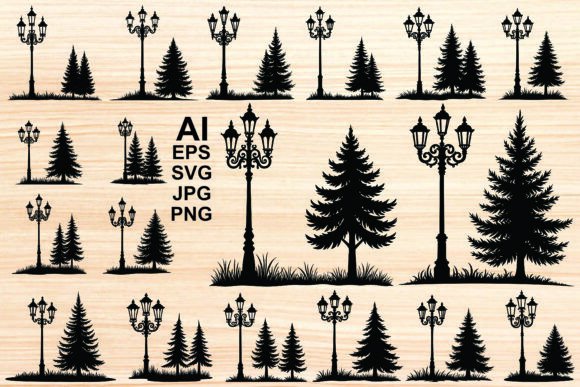
Silhouette of Street Lights and Trees
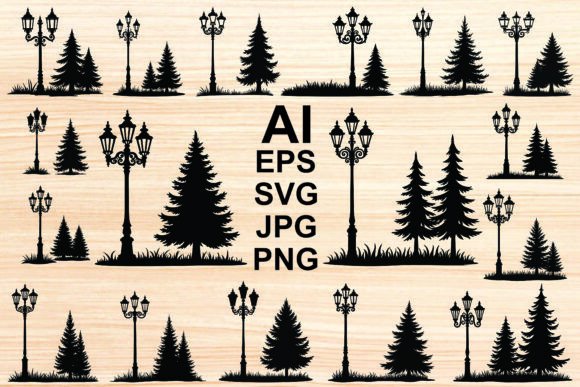
In the realm of graphic design, few visual elements possess the quiet power of a well-crafted silhouette. It is an art form defined by subtraction, where the removal of detail forces the viewer to focus on shape, form, and contrast. The Silhouette of Street Lights and Trees represents a perfect intersection of urban infrastructure and natural beauty, offering designers a versatile toolkit for evoking mood, setting scenes, and creating timeless compositions. Whether you are designing a book cover, planning a landscape architecture presentation, or crafting social media graphics, these black-and-white vector assets provide a clean, classic foundation that transcends fleeting trends.
The Enduring Appeal of High-Contrast Design
Why do vintage lampposts and coniferous trees remain such popular subjects in digital illustration? The answer lies in their inherent recognizability and emotional resonance. A vintage, ornate lamppost immediately suggests history, warmth, and a touch of nostalgia. It speaks of evening strolls, quiet parks, and traditional cityscapes. Conversely, the sharp, jagged outline of a pine or fir tree introduces an element of wild nature, stability, and evergreen endurance. When combined, these elements create a balanced narrative between the man-made and the natural world.
Using a black silhouette against a white background strips away the distraction of color and texture. This minimalism allows the eye to appreciate the intricate details of the decorative lamp post or the layered branches of the evergreen. For designers, this clarity is invaluable. It ensures that the graphic remains legible at any size, from a tiny favicon to a massive billboard. The high contrast also makes these images incredibly easy to integrate into various design systems, as they can be overlaid on photographs, solid colors, or gradients without losing their definition.
Versatility Across Creative Industries
The utility of a Silhouette of Street Lights and Trees collection extends far beyond simple decoration. Different professionals can leverage these assets to solve specific visual problems or enhance their storytelling.
For Branding and Identity Design
Small business owners and branding specialists often seek imagery that conveys reliability and tradition. An antique street light can serve as a powerful logo element for cafes, boutique hotels, or historical societies. The silhouette format ensures that the logo remains effective even when printed in single-color formats, such as on receipts, embossed stationery, or stamped packaging. By isolating the ornamental details of the lamp, designers can create a mark that feels both classic and sophisticated.
For Web and UI Design
In digital interfaces, clutter is the enemy of usability. Vector silhouettes offer a lightweight solution for adding visual interest without slowing down page load times. A row of coniferous trees can act as a subtle divider between sections of a website, while a solitary lamppost might serve as an icon for a "night mode" toggle or a location marker on a map interface. Because these files are available in scalable formats like SVG and EPS, they render crisply on retina displays and mobile devices alike.
For Print and Publishing
Authors and publishers frequently use silhouettes for book covers, particularly in genres like mystery, romance, or historical fiction. The stark contrast of a black vintage lamppost against a moonlit sky (created using background colors) sets an immediate tone of intrigue or solitude. Similarly, landscape architects and urban planners can use these graphic design elements in presentations to quickly illustrate how lighting fixtures will interact with existing greenery, providing clients with a clear, conceptual view of the proposed outdoor space.
Maximizing the Value of Vector Bundles
When you acquire a comprehensive bundle containing formats like JPG, PNG, AI, EPS, and SVG, you are investing in flexibility. However, to truly benefit from these resources, it is essential to understand how to utilize each file type effectively.
- AI and EPS Files: These are your primary working files. As vector formats, they allow you to resize the street light or tree infinitely without any loss of quality. You can also edit the anchor points to customize the shape, perhaps shortening a pine tree or adjusting the curve of a lamp arm to better fit your composition.
- SVG Files: Ideal for web development, SVGs are code-based vectors that can be styled with CSS. This means you can change the color of the silhouette dynamically using code, allowing for interactive hover effects or theme adaptations on websites.
- PNG Files: With transparent backgrounds, PNGs are ready-to-use assets for quick compositing in software like Photoshop or Canva. They are perfect for social media posts or presentations where you need to drag and drop elements rapidly.
- JPG Files: While less flexible due to their white backgrounds, JPGs are useful for quick previews or for use in documents where transparency is not required.
To access the full potential of your download, ensure you extract the zip file properly using tools like WinZip or WinRAR. Keeping your folders organized by file type will streamline your workflow, allowing you to grab the right asset for the right job without hesitation.
Creative Composition Techniques
Simply placing a silhouette on a page is rarely enough to create a compelling design. To make your work stand out, consider how you arrange these design elements. Here are a few practical approaches to elevate your use of Silhouette of Street Lights and Trees:
Layering for Depth: Although silhouettes are flat, you can create an illusion of depth by layering multiple elements. Place larger, darker fir trees in the foreground and smaller, slightly lighter lampposts in the background. This parallax effect adds dimensionality to what would otherwise be a two-dimensional image.
Playing with Negative Space: Use the white background actively. Instead of filling the entire frame, let the empty space breathe. A single, intricately detailed vintage lamp positioned off-center can be more striking than a crowded scene. The negative space draws the eye directly to the ornate details of the fixture.
Combining with Typography: Silhouettes pair exceptionally well with serif fonts, reinforcing the classic and traditional aesthetic. Try weaving text through the branches of a coniferous tree or aligning headlines with the vertical line of a lamp post. This integration creates a cohesive unit where text and image support each other rather than competing for attention.
Maintaining Consistency and Quality
When using a collection of various and different silhouettes, consistency is key to a professional look. Ensure that all elements in a single composition share a similar level of detail and line weight. Mixing a highly intricate, baroque-style lamppost with a overly simplified, cartoonish tree can create visual dissonance. Stick to assets that share the same vintage style and artistic intent.
Furthermore, always respect the integrity of the original vector paths. When resizing, hold the shift key to maintain aspect ratio, preventing the pine tree from looking unnaturally stretched or the street light from appearing squashed. Clean, crisp edges are the hallmark of a high-quality silhouette; avoid using low-resolution JPGs for large-format prints, as pixelation will detract from the elegance of the design.
Ultimately, the Silhouette of Street Lights and Trees is more than just a clipart pack; it is a foundational resource for visual storytelling. By understanding the technical capabilities of vector files and applying thoughtful design principles, creators can transform these simple black shapes into evocative, professional-grade artworks. Whether you are building a brand identity or illustrating a quiet moment in a park, these elements provide the structure and style needed to bring your vision to life with clarity and grace.