The Versatile Charm of Line Art Botanical Vegetable Borders in Modern Design
In the ever-evolving landscape of graphic design, simplicity often speaks louder than complexity. Among the myriad of trends that have captured the attention of designers, illustrators, and marketers alike, the Line Art Botanical Vegetables Border has emerged as a standout element. This specific style combines the organic warmth of nature with the clean precision of vector illustration, creating a visual language that is both timeless and contemporary. Whether you are designing a wedding invitation, a product label, or a vibrant poster, understanding how to leverage these hand-drawn outlines can significantly elevate your creative output.
Defining the Aesthetic: Minimalism Meets Nature
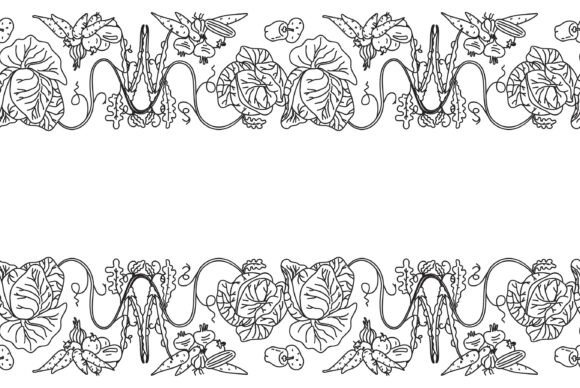
At its core, a line art botanical border is defined by what it leaves out as much as what it includes. By stripping away heavy shading, complex gradients, and solid fills, this style relies entirely on the strength of the outline. When applied to vegetables—such as cabbage, carrots, peas, peppers, and onions—the result is a delicate yet distinct representation of produce. The hand-drawn outline veggies plants offer a sense of authenticity and artisanal quality that digital perfection often lacks.
The appeal lies in the balance. A horizontal border seamless pattern isolated on white background provides a structured framework without overwhelming the central content. It acts as a frame, guiding the viewer’s eye toward the most important information, whether that is a date, a brand name, or a headline. The isolation on a white background is particularly crucial for modern workflows, as it allows for effortless integration into various color schemes and layouts without the need for extensive editing or masking.
The Power of Specific Vegetable Symbolism
While the artistic style is uniform, the choice of vegetables within the border carries semantic weight. Different vegetables evoke different feelings and associations, making the selection process a strategic design decision.
- Cabbage: Often associated with health, freshness, and traditional comfort food. Its layered leaves provide excellent textural variety in line art, adding depth to the border through overlapping curves.
- Carrot: A symbol of vitality and earthiness. The tapered shape and leafy tops introduce verticality and dynamic lines that break up horizontal monotony.
- Peas: Representing growth and abundance. The small, circular pods offer a rhythmic repetition that can soften the overall look of the design.
- Pepper: With their curved, glossy shapes implied through contour lines, peppers add a sense of vibrancy and spice, suitable for energetic or bold designs.
- Onion: The concentric layers of an onion translate beautifully into line art, providing geometric interest and a sense of structural integrity to the composition.
By combining these elements, a designer creates a narrative of wholesome, farm-to-table authenticity. This is why such illustrations are not just decorative; they are communicative tools that signal quality and natural ingredients to the consumer.
Practical Applications Across Industries
The versatility of the Line Art Botanical Vegetables Border extends far beyond simple decoration. Its adaptability makes it a valuable asset across numerous industries and project types. Here is how this graphic design element fits into various professional contexts.
Event Stationery and Celebrations
For events centered around food, nature, or rustic themes, these borders are indispensable. Consider a Birthday Wedding Greeting Card or an Invitation for a garden party. The delicate lines of hand-drawn veggies complement elegant typography without competing for attention. They add a touch of whimsy and warmth, setting a welcoming tone before the guest even reads the details. For a summer wedding, a border featuring peppers and peas might suggest a lively, colorful celebration, while cabbage and onion motifs could ground a more autumnal, harvest-themed event.
Retail and Product Packaging
In the retail sector, particularly for organic foods, farmers' markets, or artisanal shops, packaging is the first point of contact with the customer. A Label Product Shop design utilizing these vegetable outlines communicates transparency and purity. Consumers often associate line art with "clean" labels, implying fewer additives and a closer connection to the source. Whether it is a jar of pickled onions or a bag of fresh carrots, the vector illustration reinforces the natural origin of the product. Furthermore, because the pattern is seamless, it can be tiled across wrapping paper, shopping bags, or Flyer Poster backgrounds, creating a cohesive brand identity.
Digital Media and Marketing
The digital realm benefits greatly from the lightweight nature of vector files. A Banner Wallpaper for a website or a Story Celebration Template for social media requires graphics that load quickly and scale perfectly across devices. The Line Art Botanical Vegetables Border, being vector-based, retains its crispness whether viewed on a smartphone screen or a large desktop monitor. Marketers can use these borders to frame promotional text in Advertising campaigns, drawing attention to special offers or new product launches. The clean aesthetic aligns well with modern UI/UX design principles, which favor whitespace and clarity.
Technical Advantages for Designers
From a technical standpoint, working with Hand drawn outline veggies plants offers several advantages that streamline the design process. Understanding these benefits can help designers make more informed choices when selecting assets for their projects.
- Scalability: As a vector illustration, the image can be resized infinitely without loss of quality. This is essential for projects that require both small-scale applications, like business cards, and large-format prints, such as Poster displays or wall murals.
- Editability: Vector files allow designers to modify individual paths. You can easily change the stroke weight, adjust the curvature of a carrot top, or recolor specific elements to match a brand palette. This flexibility is impossible with raster images.
- Layering Potential: Because the background is transparent or white-isolated, these borders can be layered over photographs, textured papers, or solid colors. This enables creative compositing, such as placing the line art over a photo of a real vegetable field for a mixed-media effect.
- Print Readiness: Line art translates exceptionally well to print. Whether using offset printing for high-volume Flyer distribution or digital printing for short-run Greeting Cards, the high-contrast lines ensure sharp reproduction. There is no risk of pixelation or blurring, which is a common issue with low-resolution bitmap images.
Enhancing User Engagement Through Coloring and Interaction
An often-overlooked application of line art is in interactive media. The Coloring Book industry has seen a resurgence among both children and adults seeking mindfulness activities. A page featuring a detailed Line Art Botanical Vegetables Border invites users to engage creatively with the design. Similarly, in educational materials or children’s books, these outlines serve as perfect templates for learning about nutrition and plant biology. The simplicity of the lines makes them accessible for young artists, while the botanical accuracy satisfies older audiences.
Furthermore, this style translates beautifully into textile arts. Embroidery enthusiasts often seek out clear, continuous lines for their patterns. A seamless pattern of vegetables can be adapted into stitch guides for kitchen towels, aprons, or tote bags, bridging the gap between digital design and tactile craft. This cross-medium applicability increases the value of the original asset, allowing it to serve multiple markets simultaneously.
Choosing the Right Composition for Your Project
When selecting a Line Art Botanical Vegetables Border, consider the density and flow of the composition. A sparse arrangement with ample whitespace suits minimalist brands and high-end editorial layouts. In contrast, a denser cluster of cabbages, peppers, and onions creates a richer texture ideal for Product Shop backgrounds or festive Celebration Template headers.
Pay attention to the directionality. A horizontal border is perfect for header and footer placements, framing content from top and bottom. However, ensure the seamless nature of the pattern allows for easy tiling if you need to extend the border across a wide format. Check the consistency of the line weight; uniform strokes create a cohesive look, while varied weights can add dynamic emphasis to certain vegetables.
Ultimately, the success of using these botanical elements lies in their ability to enhance rather than distract. They should support the message, not obscure it. By choosing high-quality vector illustrations that offer flexibility and clarity, designers can create compelling visuals that resonate with audiences across diverse platforms. From the rustic charm of a wedding invite to the clean professionalism of a corporate Advertising campaign, the line art vegetable border remains a powerful tool in the modern designer’s arsenal.